
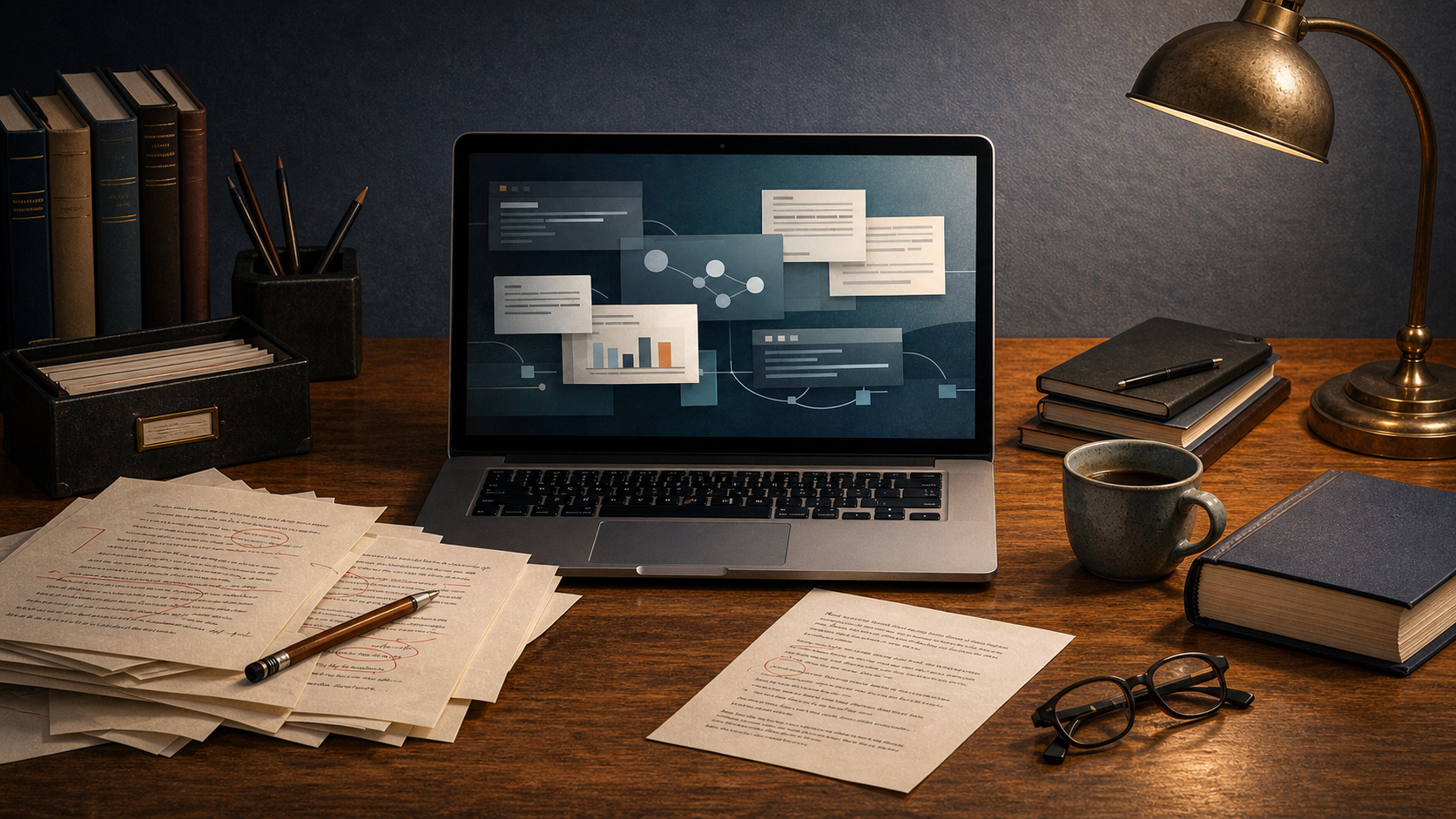
AI tools can be useful for authors. They can also make weak publishing decisions faster.
That is the tension worth taking seriously.
For independent non-fiction authors, the question is not whether AI is good or bad. The better question is where it can support judgement and where it risks replacing the very judgement that makes a book credible.
The common misunderstanding
The common mistake is to treat AI as a shortcut to authority.
A tool can help summarise notes, generate alternative headlines, test reader questions, organise launch assets or spot gaps in a description. It cannot make the author more expert than they are. It cannot take responsibility for claims. It cannot know whether the work is honest.
A serious author should not outsource the parts that require accountability.
The system underneath
Publishing is full of repeated tasks: metadata drafts, descriptions, outreach templates, social copy, content repurposing, checklist building and comparison of category language.
AI can help with those tasks because they involve pattern work. But non-fiction also depends on evidence, interpretation, voice, sourcing and trust. Those are not merely pattern tasks.
If AI makes a page more coherent, useful. If it makes a book sound more certain than the author can justify, dangerous.
What this means in practice
Use AI for pressure testing.
Ask what a sceptical reader might doubt. Ask whether a book description is clear. Ask for possible search phrases, then verify them. Ask for a checklist, then improve it with real publishing judgement.
Use it to make hidden assumptions visible. If a sales page sounds vague, an AI review may help identify where the reader decision breaks down.
But keep human control over claims, evidence, examples, conclusions and final wording.
What to avoid
Avoid mass-producing articles, books or review requests. Volume without judgement damages trust.
Avoid using AI to invent expertise, citations or reader testimonials.
Avoid publishing unverified claims because they sound plausible.
Avoid letting AI flatten the voice until the work sounds like every other advice page on the internet.
Practical checklist
Before using AI in publishing work, ask:
- Is this task administrative, analytical or editorial?
- What must be checked by a human?
- Could this output overstate the author’s expertise?
- Does the final copy still sound like the author or publisher?
- Are all claims verifiable?
- Would you be comfortable explaining how the work was produced?
Closing thought
AI is most useful when it supports a clear editorial standard. It is most risky when it becomes a substitute for one.
For serious authors, the goal is not to produce more publishing material. It is to produce more trustworthy publishing material.
See more in AI Tools for Authors.