
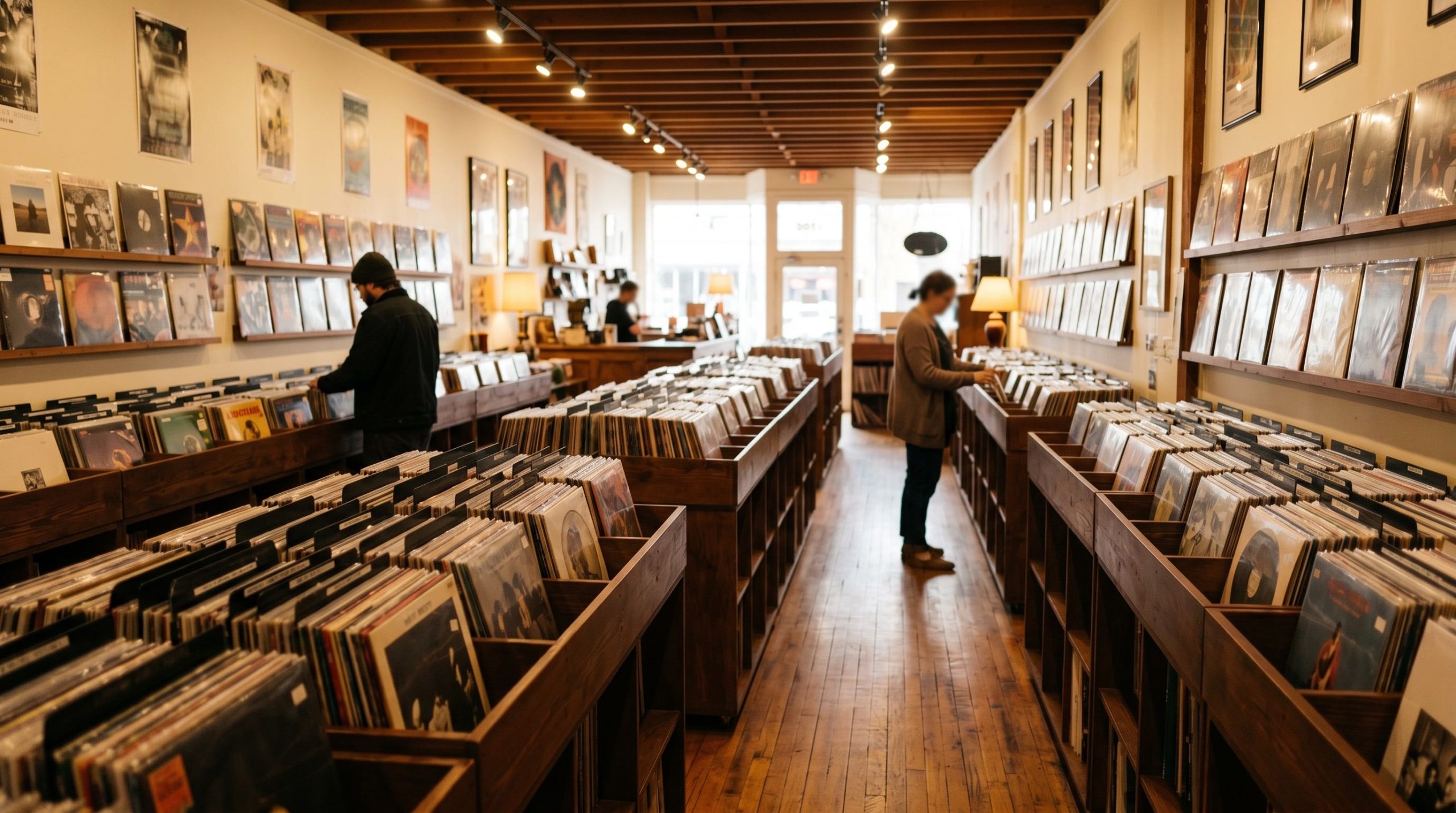
Physical media sales have been quietly rising for years. According to BPI figures, vinyl sales in the UK have grown for eighteen consecutive years.
Physical book sales have proved considerably more resilient than the publishing industry expected when e-readers arrived. Independent bookshops, widely predicted to disappear, have been opening in greater numbers than they have been closing. Disc-based video games have a small but committed market of buyers who actively prefer them to digital downloads.
This is not nostalgia, or at least not primarily. Something else is happening.
The Return to Physical Media Is Not Accidental
The people who are buying physical media again are not, for the most part, people who never left. They are people who made the transition to streaming and downloads, lived with the results for a decade, and arrived at a considered view about what they had gained and what they had given up.
That view is not uniform. Some people returned to vinyl for the sound. Some for the ritual: the deliberate, unhurried act of choosing a record, putting it on, and listening to it in full. Some because they found that streaming, for all its convenience, had changed their relationship with music in ways they did not particularly like. More access, less attention.
What these reasons have in common is that they are not primarily about the object. They are about what ownership does that access does not.
What Ownership Does
Ownership commits you. When you buy a record or a book, you have made a decision that has a small but real cost. That cost produces a different quality of attention. You are more likely to finish a book you have paid for than one you have borrowed from a library app. You are more likely to sit with an album you own than to skip through a playlist.
This is not a moral point. It is a psychological one. The friction of ownership, the money, the space, the weight, is not purely a disadvantage. It is also what makes the thing matter.
Streaming removes that friction, and with it something less easy to name. The sensation of having too much available and not quite settling on any of it. The slight anxiety of the infinite catalogue. The feeling, at the end of an evening, that you listened to a great deal of music without really listening to any of it.
Ownership as a Statement
There is also a quieter dimension to the return to physical media, which is about what it means to own something in a culture that has made ownership feel optional.
Buying a record now is a more deliberate act than it was in 1988, precisely because it is no longer the default. It is a statement about how you want to relate to music. Not passive access, but active choice. Not a catalogue, but a collection.
This is new. Physical ownership used to be the only option. Now it is a position, one that a growing number of people are consciously adopting, for reasons that have more to do with what they value than with what they remember.
The Question Worth Sitting With
The vinyl revival, the bookshop reopenings, the preference for disc over download: these are not a rejection of the modern world. They are, in their own way, a response to it. A set of decisions made by people who have experienced both arrangements and arrived at a preference.
That preference is worth understanding, not because everyone should share it, but because the reasoning behind it clarifies something about what was lost when ownership became the exception rather than the rule.
The shelf in the old photograph is not coming back. But the question of what it represented, and whether we want some version of that back, is one that more people are asking than you might expect.
Read alongside How We Stopped Owning Things Without Noticing, What Your Record Collection Said About You, and Why You Cannot Throw Away Your Old DVDs for the wider argument about why ownership is returning to view.
Nothing to Show for It by Ian Wilkinson expands this argument into a full account of how ownership gave way to access, and what was quietly lost in the exchange. Paperback £9.99. Kindle £2.99. Free on Kindle Unlimited. Read more about the book, see edition details, and buy your copy here.