
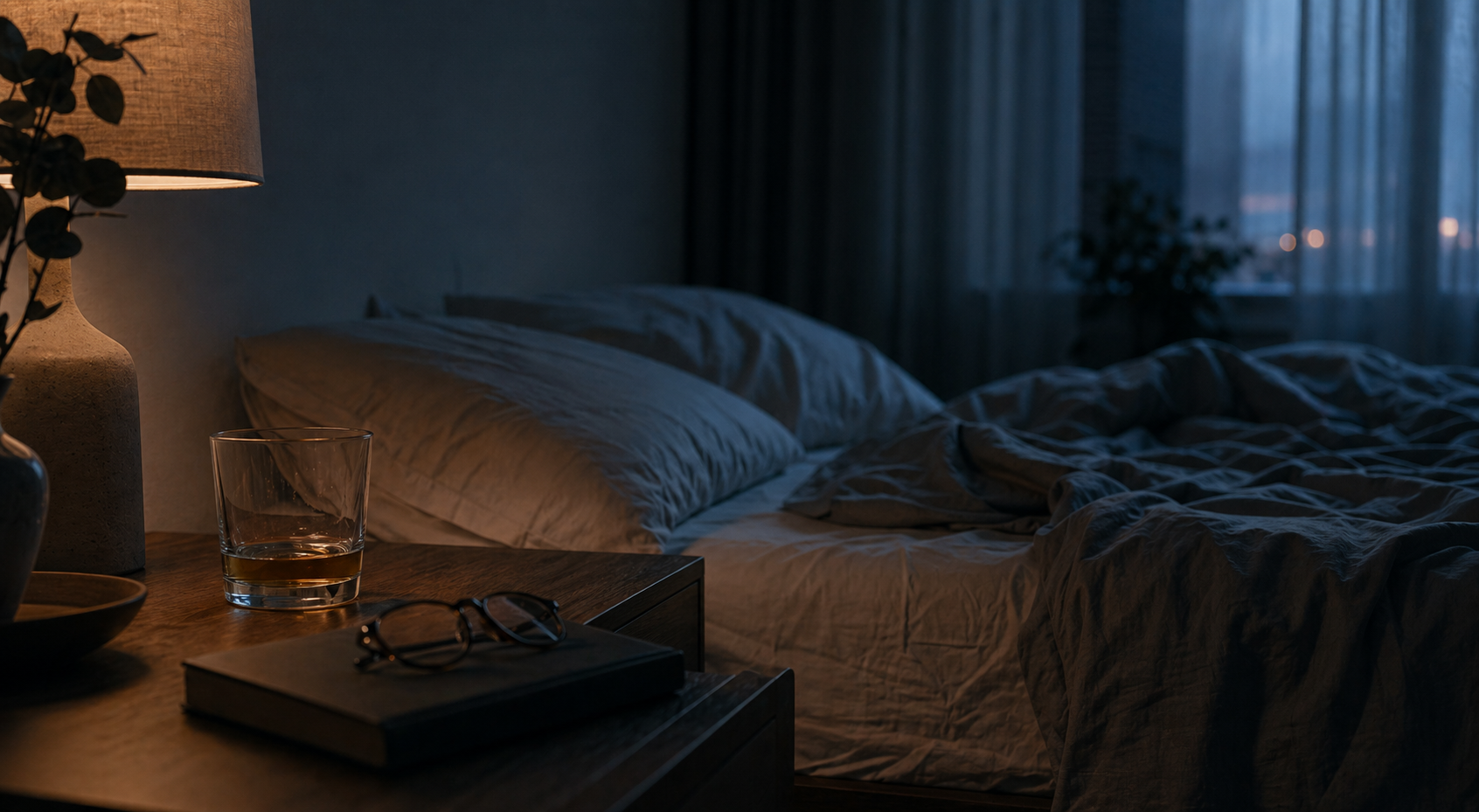
The alcohol and sleep relationship is one of the most widely misunderstood in everyday health. Most people who drink regularly will tell you that a drink helps them sleep. The relationship between alcohol and sleep is one of the most misunderstood in everyday health. And in a narrow, technical sense, they are right. Alcohol is a sedative. It reduces the time it takes to fall asleep. If you have ever had a glass of wine and felt your eyes get heavy before ten o’clock, that is a real effect.
The problem is what sedation is not.
Why alcohol and sleep do not mix
Sleep is not simply unconsciousness. It is a biological process with distinct stages, each doing different work. The deep, slow-wave sleep in the early part of the night handles physical recovery. The lighter sleep towards morning, the REM phase, handles memory, emotional processing, and the kind of mental upkeep that keeps you functioning well the next day. You need both. They are not interchangeable.
Alcohol and sleep are incompatible in this structural sense. Alcohol disrupts that sleep structure in a specific way. It front-loads the sedation, dropping you into heavy sleep early in the night. Then, as it metabolises over the second half, it produces a rebound effect. The body swings in the other direction. Sleep becomes lighter and more broken. The REM phase gets cut short.
You may not remember waking. But the quality of the sleep changes. The restoration is incomplete. Which is why someone who “sleeps fine” after drinking can still wake feeling unrested, slightly flat, and in need of considerably more coffee than usual.
The long-term pattern
Over time, if the drink-before-bed pattern becomes habitual, something more significant shifts. The body starts to rely on the sedation to initiate sleep at all. The ability to fall asleep without chemical assistance begins to erode. Which means the drink ends up solving a problem it created.
Understanding the alcohol and sleep relationship is worth knowing not because it should make you feel guilty about a glass of wine, but because it is information the industry has worked hard to keep out of the conversation. The cultural image of the nightcap, the drink that helps you wind down and signals the proper end of the day, is one of alcohol’s most durable marketing achievements. It takes a genuine physiological effect and frames it as a benefit, while the less convenient half of the story gets quietly left out.
Most advertising leaves things out. This particular omission is costing a lot of people a lot of sleep.
The alcohol and sleep relationship is not complicated once you understand the mechanism. Alcohol sedates you, but sedation is not rest. The body needs both stages of sleep to function well, and alcohol reliably disrupts the second half of the night. People who feel tired despite sleeping after drinking are not imagining it. They are experiencing exactly what the evidence predicts. Knowing this does not require changing anything. But it does change the accuracy of the story you tell yourself about why you feel tired after a night of drinking regularly.
The Quiet Con by Ian Wilkinson expands this argument into a full account of how drinking was made to feel normal, harmless, and beyond serious question. Paperback £9.99. Kindle £2.99. Free on Kindle Unlimited. Read more about the book, see edition details, and buy your copy here. It also helps to understand what the official low-risk drinking guidelines actually mean in practice.
Stay up to date with new writing from Ian Wilkinson at thequietcon.substack.com