
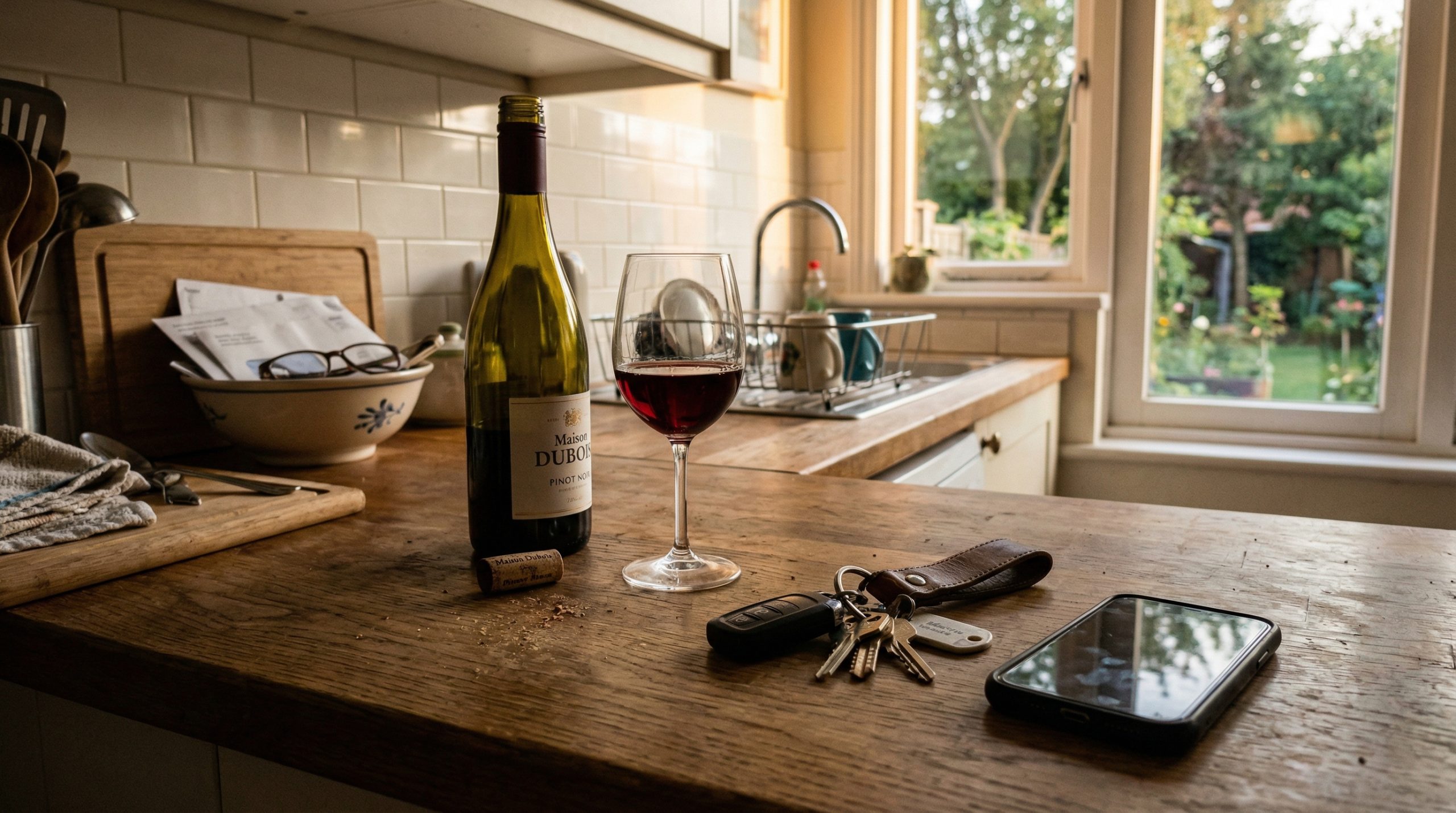
An alcohol habit rarely feels like a habit while you are inside it.
Ask most people whether they have an alcohol habit and the answer is usually no. They drink at weekends. They have a glass of wine with dinner most evenings. They enjoy a beer after work on Fridays. These feel like choices, not habits. The distinction matters to people, and it is largely illusory.
What a habit actually is
A habit is a behaviour that has become automatic in response to a cue. The cue triggers a routine, which delivers a reward, which reinforces the pattern. Over time, the behaviour requires less conscious decision-making. It just happens.
Most people associate habits with things like brushing teeth or putting a seatbelt on. Automatic, unremarkable, not particularly loaded. Drinking does not feel like that, partly because each individual occasion still involves a degree of active enjoyment. You are choosing the wine. You are savouring it. It feels nothing like a reflex.
But the decision about whether to drink, as opposed to which drink to have, has often already been made, which is the defining feature of an alcohol habit before the evening begins. The glass of wine after work is not a fresh choice each Tuesday. It is a standing arrangement that you have with yourself, triggered by arriving home, by the sound of keys on the counter, by the shift from work mode to something else.
The cues are everywhere
Part of what makes alcohol habits so stable is that the cues are deeply embedded in ordinary life. Friday is a cue. A difficult day is a cue. A good day is a cue. Cooking dinner is a cue. Sitting down to watch something is a cue. Meeting friends is a cue.
The range of triggering situations is wide enough that almost any evening can become an occasion. This is not a coincidence. The marketing around alcohol has spent decades associating drinking with every available mood and context. Celebration, relaxation, socialising, unwinding, rewarding yourself. The cue set has been deliberately expanded.
As the evidence on alcohol and stress makes clear, the belief that drinking helps you decompress is a significant part of what drives habitual evening drinking. The drink has become associated with the transition from stress to ease, which means the stress itself becomes a reliable cue.
Why an alcohol habit does not feel like a habit
Several things obscure the habitual nature of routine drinking. One is the sense of active enjoyment. You are not just going through the motions; you are genuinely looking forward to it. But this is also true of other habits. The fact that something feels good does not mean it is freely chosen in any meaningful sense.
Another is the absence of obvious consequences. NHS guidance on alcohol notes that an alcohol habit can build gradually without obvious warning signs. Someone who drinks a bottle of wine a week, spread across several evenings, is unlikely to notice much impact on their daily functioning. The sleep effects tend to be attributed to other causes. The low-level fatigue becomes normal. The baseline shifts, and the shifted baseline becomes the new reference point.
There is also the social framing. Habits are what other people have. What you have is a lifestyle, a routine, a way of relaxing. The word “habit” carries a slight stigma in the context of alcohol, which makes it harder to apply it to yourself even when it fits.
The difference between moderation and habit
What moderation actually means and what habitual moderate drinking looks like are not the same thing. Someone can drink within the recommended guidelines every week, reliably and consistently, and still be drinking habitually in the sense that the pattern is driven by routine rather than genuine, unconstrained choice.
This does not make the behaviour dangerous or irresponsible. But it does mean that breaking an alcohol habit can feel surprisingly difficult, not because of dependence in any clinical sense, but simply because the cues are everywhere and the habit is deeply grooved.
How you know if you have one
The clearest test is straightforward. Take a month off and see how it feels. Not whether you can do it, but what the experience is like. If several evenings feel oddly flat without a drink, if Friday feels like it is missing something, if you find yourself thinking about a glass of wine before you have even decided whether you want one, those are the contours of an alcohol habit.
None of that means you need to stop. It just means you are seeing the pattern clearly, possibly for the first time. And seeing it clearly is the beginning of actually being able to choose. As the question of why we feel we have to justify not drinking suggests, the whole architecture of drinking culture is set up to make the habit invisible. Noticing it is harder than it sounds.
Read alongside Giving Up Alcohol: The Biggest Lie About What You Lose for the wider story about why that sense of loss feels so persuasive.
The Quiet Con by Ian Wilkinson expands this argument into a full account of how drinking was made to feel normal, harmless, and beyond serious question. Paperback £9.99. Kindle £2.99. Free on Kindle Unlimited. Read more about the book, see edition details, and buy your copy here.
Stay up to date with new writing from Ian Wilkinson at thequietcon.substack.com