
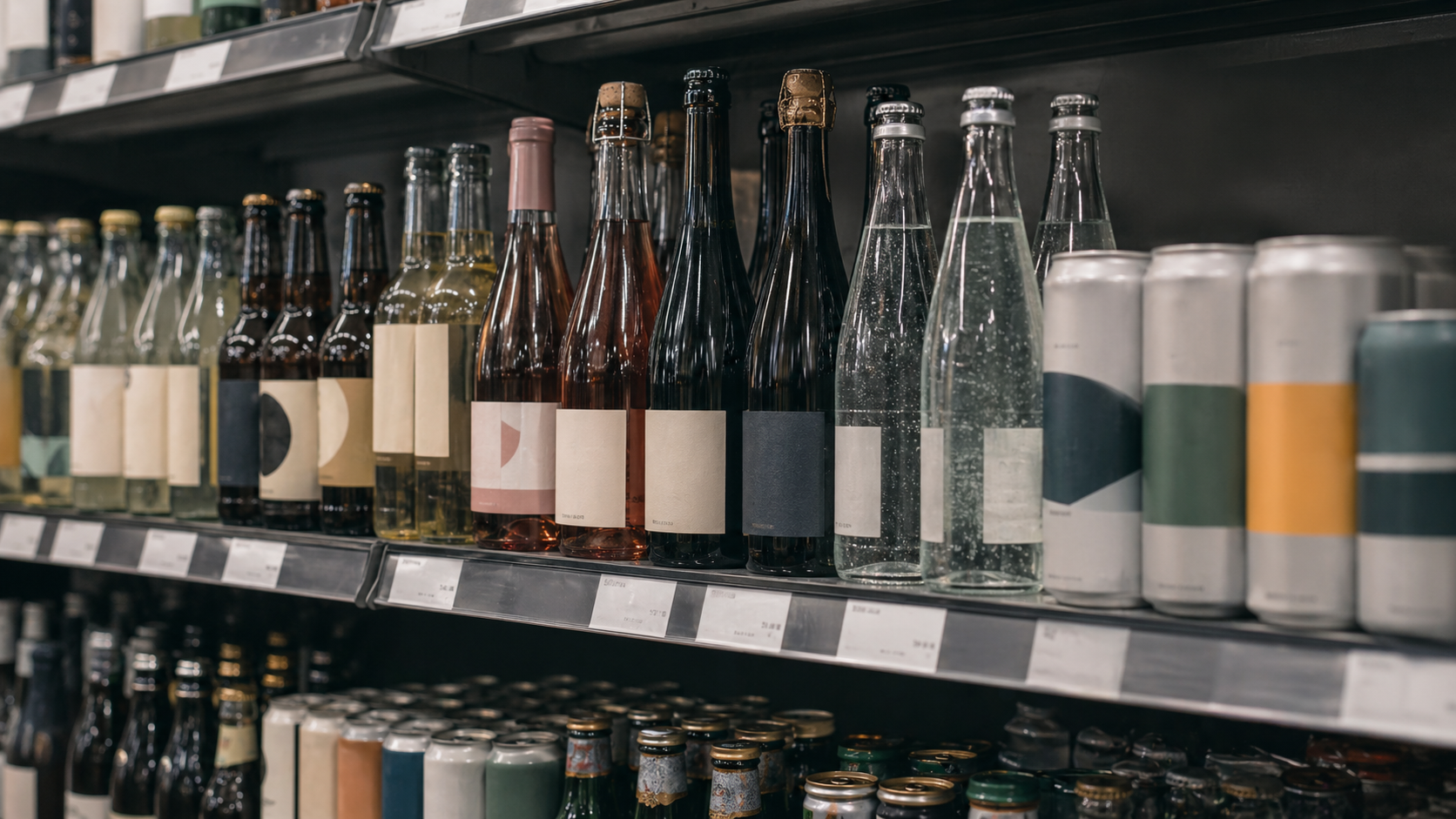
Walk into any supermarket and you will find it. No-alcohol wine. Alcohol-free gin. Zero-ABV lager that costs nearly as much as the real thing. Premium spirits with the ethanol removed but the branding intact, same bottle, same label, same ceremony of pouring it into a nice glass.
The obvious explanation is health consciousness. The no-alcohol market has grown significantly over the past decade. People are more aware of what alcohol does to them, so the industry has responded by offering a version without the bit that causes the damage. A sensible adaptation to changing consumer preferences.
Why no-alcohol drinks reveal something important
But look at it from a different angle and something more interesting appears.
If drinking was primarily about the taste, the pleasure in the liquid itself, there would be no market for versions of it without the active ingredient. The taste of alcohol-free wine is close to the original, but not the same, and anyone who tells you otherwise has not done a side-by-side. If taste were the point, the compromise would not be worth making.
The no-alcohol category is growing because people are drinking for reasons that have nothing to do with wanting ethanol in their bloodstream. They want the glass in their hand. They want the social permission to be present at the table. They want the ritual: the crack of a can, the pour, the pause before the first sip. They want to participate. To be the person who has a drink. Because that person fits in, and the person without a drink tends to require an explanation.
Which reveals something about what the industry has actually been selling all along. Not the drink. The belonging. The occasion. The sense of being someone who relaxes this way, celebrates this way, decompresses this way.
What the no-alcohol drinks market is actually telling you
The no-alcohol category did not emerge because the industry suddenly cared about your liver. It emerged because the industry realised it could follow you into sobriety and keep selling you the ritual: the glass, the moment, the identity, with the health risk removed and the margin intact.
That is a remarkable commercial move. And it tells you more about what you have been buying than any advertising campaign ever would. What you were paying for was never the drink. It was what the drink was supposed to mean.
The growth of no-alcohol drinks is not a health revolution. It is a market adaptation. The drinks industry has recognised that a significant portion of its customers want the ritual without the substance, and it has moved quickly to supply exactly that. Whether this is progress depends on what you think the problem was in the first place. If the issue was alcohol itself, it helps. If the issue was the dependency on a ritual to feel comfortable, the no-alcohol aisle does not change very much at all.
The rise of no-alcohol drinks is worth paying attention to for this reason. It is not a story about changing tastes or health trends. It is a story about what alcohol was providing in the first place, and whether that provision was ever really about the drink itself. Once you see the category through that lens, the question of what you are actually buying when you reach for an alcoholic drink becomes much harder to dismiss. The answer is rarely just the liquid in the glass.
The Quiet Con by Ian Wilkinson expands this argument into a full account of how drinking was made to feel normal, harmless, and beyond serious question. Paperback £9.99. Kindle £2.99. Free on Kindle Unlimited. Read more about the book, see edition details, and buy your copy here. Some of that pressure is visible in why not drinking still feels like it needs justifying.
Stay up to date with new writing from Ian Wilkinson at thequietcon.substack.com